ELIZABETH RAMÍREZ-SOTO. ISABEL SEGUÍ. MARINA CAVALCANTI TEDESCO. MARCELA VISCONTI.
We celebrate the publication of the special issue ‘Guerrilla Archiving: Documents for a Feminist History of Latin American Cinemas’ (Studies in Spanish and Latin American Cinemas 20.3) by offering a cluster of 15 key examples of feminist Latin American filmmaking of the 20th century available to watch, teach, and get ideas for curation. This list has been put together by members of RAMA (Red de Investigación del Audiovisual hecho por Mujeres en América Latina). Although playing the role of list-maker always carries power, the selection – arranged in chronological order – has no canonical intentions. Given the historical period covered, most of the works have been directed by white, upper- and middle-class women. However, we guarantee that the diversity of styles, genres, themes, and production practices will blow you away. As said, this list is not exhaustive but a crucial starting point. We encourage researchers and activists to make more films available!

A Entrevista / The Interview (Helena Solberg, Brazil, 1966).
This is one of the first known productions of Latin American feminist cinema. At a time when filmmakers were turning their cameras to the “other”, Helena Solberg interviewed dozens of women like herself: white and belonging to the upper classes of Rio de Janeiro, A Entrevista’s film language is a bold encounter between these testimonies (about marriage, virginity, work, religion…) and reenactments, the image and soundtrack, and much more. It brings to the screen the complexities of this identity, from an “insider” perspective.
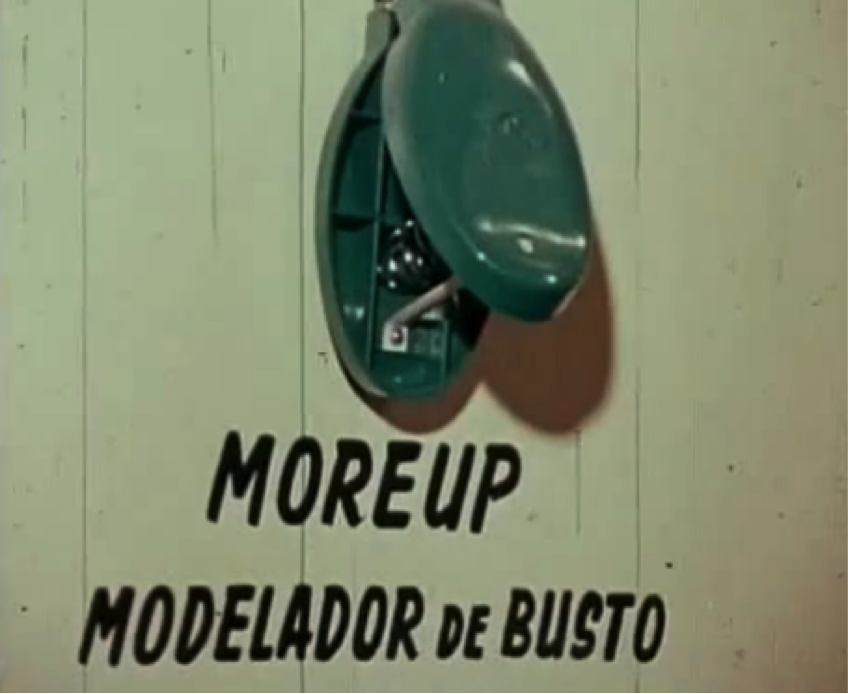
El mundo de la mujer / Women’s World (María Luisa Bemberg, Argentina, 1972).
El mundo de la mujer is the first film directed by María Luisa Bemberg and marks a milestone in the relationship between cinema and feminism in Argentina in the 1970s. Its production was supported by Unión Feminista Argentina, a group cofounded by Bemberg. Filmed in 16 mm at the FEMIMUNDO exhibition held in Buenos Aires in 1972, this film ironises about this commercial universe of “fashion and elegance, beauty, cosmetics, food, household items” that revolves around seducing, and keeping, men. A meticulous, experimental work, the sound creates a contrast with the images, producing a montage effect that fosters a critical analysis of this supposed “women’s world” that the exhibition seeks to promote and sell. The film questions the cultural meanings of femininity and embodies the ideas and practices of contemporary feminist activism. The collective sense of such a project was key to Bemberg venturing down the cinema path in the near future.
Watch El mundo de la mujer here.

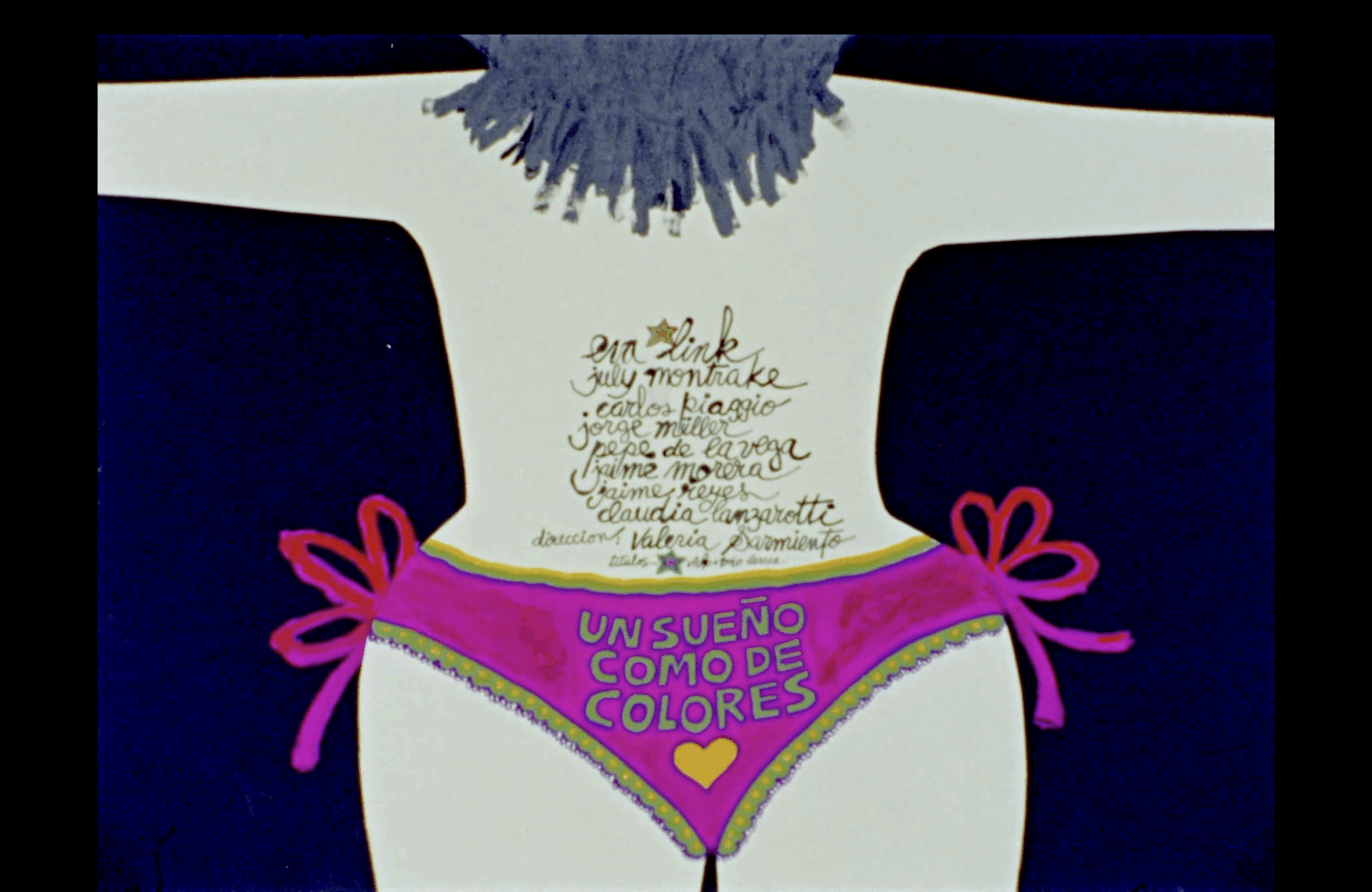
Un sueño como de colores / A Dream as if in Colours (Valeria Sarmiento, Chile, 1972).
Sarmiento’s short documentary was thought lost for over fifty years and recovered in 2021 by the director herself. The film was found, as she has explained, in her “magic closet” in Paris, where she fled after the violent ending of the socialist government in Chile in 1973. In her first film, the director follows the lives of two women strippers, intertwining images of their everyday life with that of their work as “exotic dancers” using an expressive montage. The film was little understood at the time, as it radically distanced itself from the dominant militant stance that characterised the cinema of the period.
Watch Un sueño como de colores here.
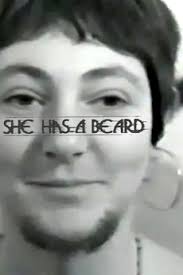
She Has a Beard (Norma Bahia Pontes & Rita Moreira, US, 1975).
This documentary is part of the “Living in New York City series”, a project by Pontes and Moreira. Its directors are emblematic of diasporic lesbian audiovisual production. In it, the artist Forest Hope, a woman with a beard, walks the streets and asks fellow women what they think about facial hair. The work challenges beauty standards, femininity, and the prevailing understandings of gender, highlighting how oppressive they are. It is a pioneering production of Latin American feminist video, which brings to the fore a theme that is rarely addressed in audiovisual media.
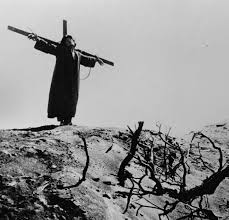
A Propósito de la Mujer/ Regarding Women (Kitico Moreno, Costa Rica, 1975).
This early work for Central American feminist cinema mobilises fictional and documentary resources to address the oppression of women. Through a non-hegemonic language, it raises issues that are still relevant to feminism today. It presents testimonies from women of different social classes, conveying that women are not a homogeneous group. Through performances, by the director herself, it brings to the screen the symbolic and subjective dimensions of oppression, as well as its link to Catholicism.
Watch A Propósito de la Mujer here.

La femme au foyer / The Housewife (Valeria Sarmiento, France, 1976).
This was Sarmiento’s first film after her arrival in France. Shot with a minimal budget in Paris, this short fiction is set in a wealthy neighbourhood of Santiago de Chile during the last months of Allende’s government. The Housewife explores the alienation of a reactionary middle-class woman who, trapped in the routine of her domestic life, shows discontent for the socialist revolution. Sarmiento’s fascination for the telenovela can already be seen here, in a hilarious scene in which a group of women stare at the television, while the spectator listens to the telenovela’s ridiculous dialogues penned by Raúl Ruiz, the director’s husband.
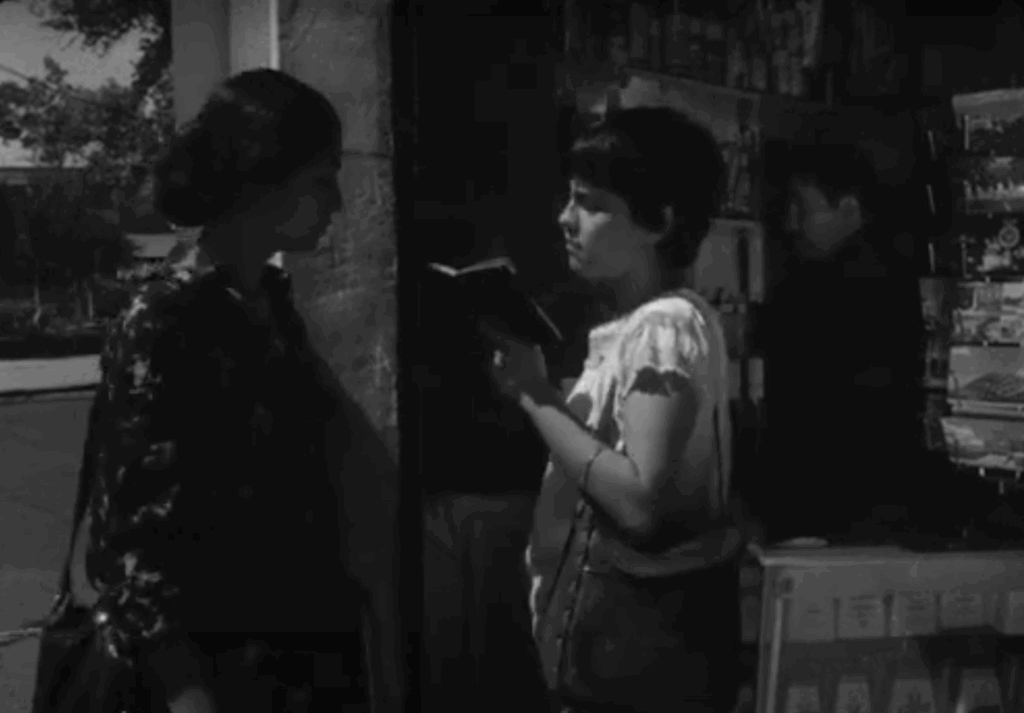
Cosas de mujeres / Women’s Things (Rosa Martha Fernández & Cine Mujer Collective, Mexico, 1978).
Through a fictional story combined with a series of documentary resources (interviews, testimonies, statistics), Cosas de Mujeres denounces the risks and problems associated with abortion practiced illegally and in precarious conditions. Starring a university student victim of a poorly carried out medical practice, the story highlights the importance of friendship and solidarity between women. With a pedagogical and political sense and in alliance with the women’s movement and feminist activism, Cosas de mujeres was an audiovisual research project carried out by Rosa Martha Fernández and the Cine Mujer de México collective (integrated by Beatriz Mira, Guadalupe Sánchez, Ángeles Necoechea, María del Carmen Lara and other women) as a form of intervention in the struggle to decriminalise abortion in this country and against the mechanisms of patriarchal oppression over women’s bodies and lives.
Watch Cosas de mujeres / Women’s Things here.

¿Y su mamá que hace? / And what does your mum do? (Eulalia Carrizosa & Cine Mujer Collective, Colombia, 1981).
¿Y su mamá que hace? shows how, through encounters with feminism in the 70s and 80s, cinema became a collective form – and an apprenticeship laboratory – in support of the fight for women’s rights. Filmed in 16 mm, this satirical short film about invisible labour was made by the Colombian group Cine-Mujer. It portrays the daily routine of a middle-class housewife dedicated to a multitude of domestic tasks to assist her husband and children. Wait until the end for the joke.
Watch ¿Y su mamá que hace? here
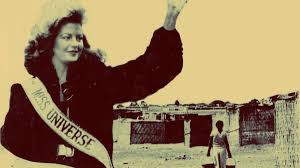
Miss Universo en el Perú / Miss Universe in Peru (Chaski Collective, Peru, 1982).
The documentary is constructed around the opposition between two events celebrated in Lima in July 1982: the Miss Universe contest and the VI Congress of the Peruvian Confederation of Peasants. The television business that is the contest for the election of the most beautiful woman in the world imposes a global beauty canon, in addition to being a very lucrative enterprise. But Miss Universo en el Perú not only denounces and ridicules the American contest but also allows us to witness the political practice of organised women who resist the Western heteropatriarchal and capitalist mandate. In addition, the women represented in Miss Universo en el Perú belong to all social classes, with the special participation of Indigenous women, who, with a defiant gaze, challenge the manipulation attempted by corporate patriarchy.
Watch Miss Universo en el Perú here
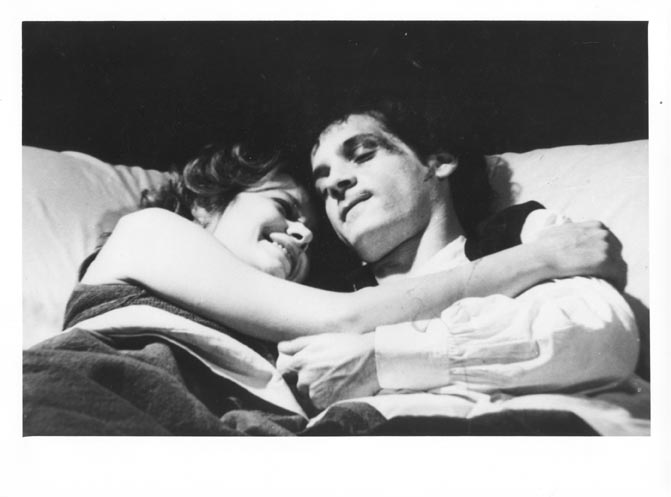
Señora de nadie / Nobody’s Wife (María Luisa Bemberg, 1982).
The visual motif of the prison marks the opening of Señora de nadie, a film starring a housewife, who decides to leave her home and, before doing so, leaves sticky pieces of paper that reveal the domestic tasks – the daily and invisible work – that she will not complete. The plot reveals key interests of the feminist struggles in the 60s and 70s: the disarticulation of a romanticised conception of marriage and motherhood that ignores the overload of tasks that women face; the necessary economic independence as a way of accessing freedom; the idea that being a mother is not the only path to personal fulfilment, among others. On top of the decision of a woman to live her life with responsibility and without guilt, another challenging aspect of the film is her relationship with a new gay friend, companion, and confidant. The representation of this character, endearing but not caricatured, is the reason the project was delayed for five years, rejected by dictatorial censorship until 1983, when, on the verge of democracy, new airs made other stories possible on the screens.

El hombre cuando es hombre / A Man When He’s a Man (Valeria Sarmiento, Costa Rica,1982).
This ironic deconstruction of machismo in Latin America is Sarmiento’s better-known documentary. Made in Costa Rica, the film explores how different cultural practices – such as folklore or boleros–perpetuate patriarchal behaviours. Disguising her role as a director while shooting and telling the men of different ages who she interviewed that the production dealt with romanticism, Sarmiento captures shocking assumptions of gender roles. What these men reveal is so outrageous that after its broadcasting in France, the Costa Rican Ambassador wrote a public letter complaining about the country’s depiction. Innocuous at first, the masterful montage increasingly reveals the deathly violence against women.
Watch El hombre cuando es hombre here

Journal inachevé / Unfinished Diary (Marilú Mallet, Chile/Canada, 1982).
This first-person documentary film uses the diary form to convey the director’s everyday life as a Chilean exiled woman artist in Montreal, where she has lived since Pinochet’s military coup in 1973. Spoken in English, Spanish, and French, the film bridges the individual and collective experiences of forced political displacement. Set largely in the domestic sphere, Journal inachevé is an intimate, warm, and moving essay that interrogates the boundaries between fiction and nonfiction, and is, as the director describes it, “a journey through the states of the soul.”

Fragmentos de un diario inacabado / Fragments of an Unfinished Diary (Angelina Vázquez, Chile, 1983).
The film’s title addresses the director’s interrupted homecoming to Chile, a journey she registered in a written diary. Exiled in Finland since 1974, Vázquez entered semi-clandestinely in 1983 to make a documentary about the state of the country, facing an unprecedented social upheaval at the time, but was forced to leave by agents of the military dictatorship. The completion of the film was then undertaken by a technical crew made of Finnish and Chilean filmmakers and directed by Vázquez from a distance. Direct cinema footage of demonstrations and life under Pinochet’s regime is mixed with a wide range of interviews, including shantytown dwellers, actors, and politicians.
Watch Fragmentos de un diario inacabado here
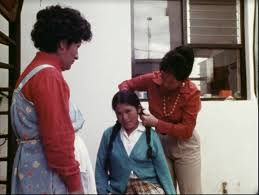
Antuca (María Barea & Warmi Collective, Perú, 1992).
Antuca is a coming-of-age drama about a young woman born in a Quechua community in Cajamarca, who has worked since childhood as a maid, in semi-slavery conditions, until she gets involved with a domestic workers’ union and learns how to organise and defend her rights. The film was made by the Warmi film group, the first collective of women filmmakers in Peru, and the association of domestic workers IPROFOTH. It is a perfect example of inter-class collaboration for the creation of feminist film narratives.
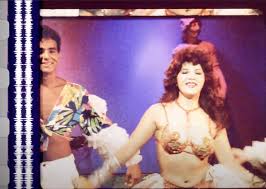
Luna de almendra / Almond Moon (Rosa María Álvarez Gil, Perú, 1992).
This short documentary tells the story of Clarita Castaña. a young working-class woman, who becomes a successful showgirl in Lima in the 1980s. It subjectively portrays the agency of the showgirls, representing a certain sex-positive current within Latin American feminism, and relating to films with a similar agenda, such as Un sueño como de colores by Valeria Sarmiento (number 3 on this list).
ELIZABETH RAMÍREZ-SOTO is Associate Professor of Film in the School of the Arts at Columbia University. She is a film and media historian researching on transnational cinema and television, feminist film histories, and documentary. Elizabeth is the author of (Un)veiling Bodies: A Trajectory of Chilean Post-Dictatorship Documentary (Legenda, 2019) and coeditor of Nomadías: El cine de Marilú Mallet, Valeria Sarmiento y Angelina Vázquez (Metales Pesados, 2016). Her work has appeared in such journals as Historical Journal of Film, Radio and Television, Feminist Media Histories, and Jump Cut, as well as in numerous edited collections. She is currently working on a book tentatively titled Unruly Bedfellows: Latin American Filmmakers and European Public Television. She is co-founder of Red de investigación del Audiovisual hecho por Mujeres en América Latina, RAMA.
ISABEL SEGUÍ is a lecturer at the Department of Film Studies of the University of St Andrews and co-director of the St Andrews Institute for Gender Studies. Her research focuses on the collaboration between middle-class and working-class women in film and video production in the Andean-Amazonian region. Her work has been published in numerous outlets in Europe and the Americas, such as Feminist Media Histories, Jump Cut, Framework and Latin American Perspectives. She is a cofounder of RAMA, the Latin American Women’s Audiovisual Research Network, and co-leads the Reversible Archive, an online repository of primary sources for the research of Peruvian Women’s Nonfiction Film and Video.
MARINA CAVALCANTI TEDESCO is a professor in the Department of Film and Video at Universidade Federal Fluminense (UFF). Cofounder of RAMA, she’s been researching women in Latin American Cinema for over a decade. Among other books, she edited, Mulheres que constroem imagens: a parceria criativa de Kátia Coelho e Lina Chamie (2024), Mulheres, cinema e vídeo no Brasil: (mais de) 40 anos de pesquisa (2022) and Trabalhadoras do cinema brasileiro: mulheres muito além da direção (2021) and coedited Cinematografia, Expressão e Pensamento (2019) and Feminino e plural: mulheres no cinema brasileiro (2017).
MARCELA VISCONTI is a doctor in History and Theory of the Arts and master’s in Communication and Culture at Universidad de Buenos Aires (UBA) and professor at the same institution. Currently, she works as director of the Institute of Gender Studies of UBA (IIEGE). She is a member of the editorial board of Mora, journal of the IIEGE. During the period 2016-2018 she was vice-president of AsAECA, the Argentine Film Studies Association. She is co-editor of El asombro y la audacia. El cine de María Luisa Bemberg (2020) y editor of Ante la crítica. Voces y escrituras sobre cine (2024).